Quick Answer: When buying wooden toys, look for age-appropriate pieces, smooth construction, secure parts, clearly identified materials, and finishes intended for children’s toys. Good quality signs also include useful safety information, sturdy construction, and a design your child can enjoy in more than one way.
Start With the Child, Not the Wood
One of the easiest buying mistakes is assuming that a wooden toy is a good choice simply because it looks sturdy and natural. I have found it much more useful to start with the child who will actually play with it.
Check the manufacturer’s recommended age first. Age guidance can reflect the size of the pieces, how the toy is designed to be used, and whether it contains components that could be unsuitable for younger children.
Then think about what your child can comfortably do right now.
A complicated wooden puzzle might look educational, but it can spend months untouched if the pieces or concept are too difficult. At the other extreme, a very simple toy may offer little interest to an older child.
When my son was 4, I once chose a wooden puzzle because I loved the detailed animal shapes. He ignored it after a few minutes because fitting the small pieces required more patience than he had at that stage.
That experience made me pay much more attention to the child than to how impressive a toy looks on the shelf.
Look Closely at How the Toy Is Made
Good wooden toys usually give you several small quality clues.
Run your fingers over the surface when you are shopping in person. It should feel smooth, including around holes, corners, cutouts, handles, and the ends of individual pieces. Rough grain, splinters, sharp points, or poorly finished openings deserve extra caution.
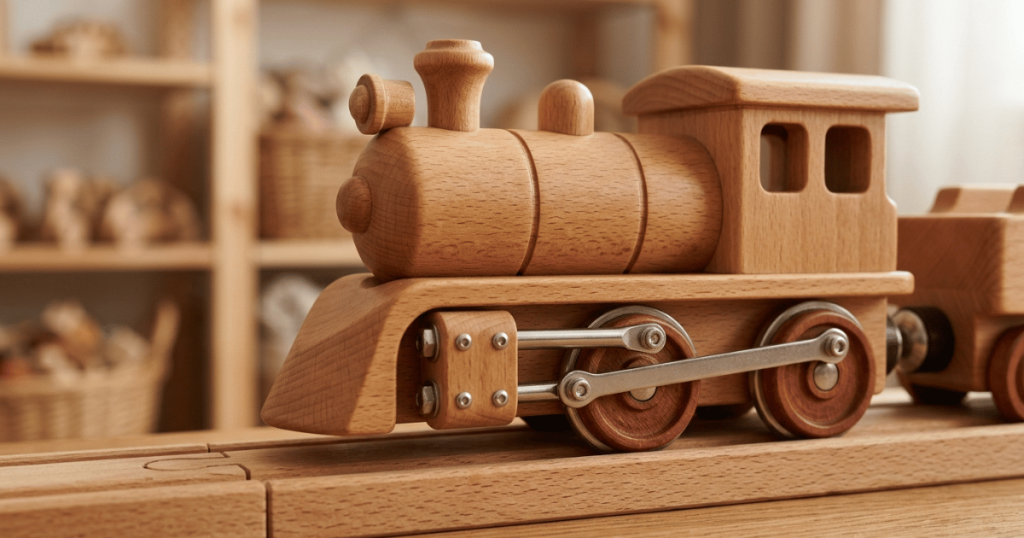
Check moving components too. Wheels, pegs, knobs, handles, and joined sections should feel secure rather than loose or wobbly.
Construction becomes even more important when a toy will be dropped regularly.
My daughter had a little wooden pull-along toy when she was around 5 that was bumped into table legs more times than I could count. What impressed me was not that the wood stayed cosmetically perfect, because it did not, but that the wheels and joints remained firm.
Those are the kinds of quality signs I now notice.
Find Out What “Wooden” Actually Means
A product description that simply says “wooden toy” does not tell you very much.
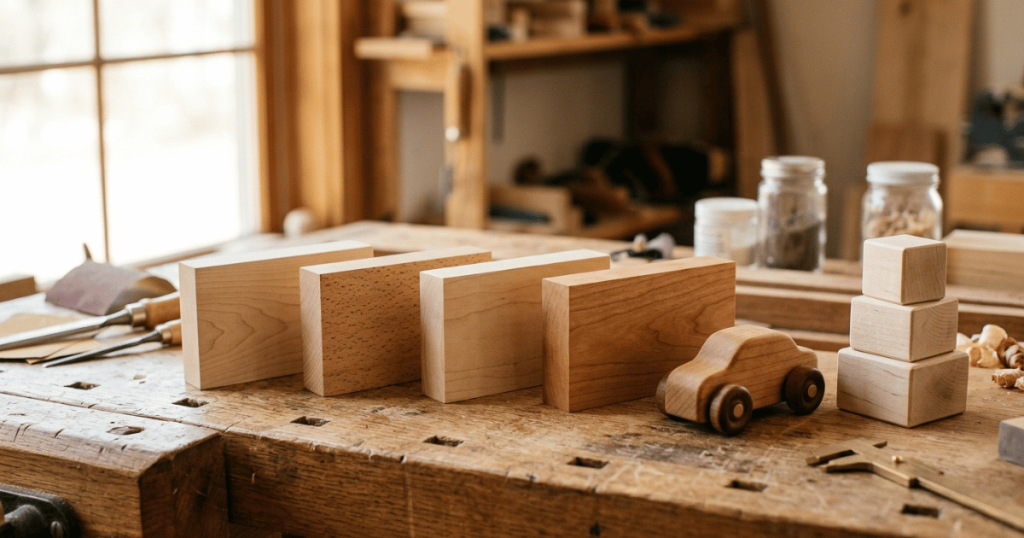
Solid hardwoods such as beech, maple, and rubberwood are commonly used for durable toys. Plywood can also appear in wooden toy construction, while MDF and other engineered materials are different from solid wood because they are manufactured from wood fibers or particles held together with binders.
You do not need to become a wood expert before buying a toy.
What matters to me is transparency. If a manufacturer clearly explains the material, construction, and finish, I have more useful information for making a decision. A vague description that repeatedly says “natural wood” without identifying the material tells me much less.
This is especially helpful when spotting cheap toys online, where attractive photography can hide material differences.
Check the Finish and Paint
Children handle toys roughly, and younger children may put toys in their mouths, so the surface deserves attention.
Look for clear information about the paint, coating, oil, wax, or other finish used. “Water-based” and “non-toxic” are common terms, but I still prefer sellers that provide meaningful toy safety or compliance information rather than relying entirely on reassuring marketing words.
The finish itself should also look intact.
Peeling, bubbling, flaking, or badly chipped coatings are warning signs. On an unpainted toy, check for rough grain and areas that appear cracked or damaged.
Do not assume unfinished wood is automatically the safest option. It still needs appropriate construction, smooth finishing, and sensible care.
Treat Safety Labels as Information, Not Decoration
Safety information is especially important for babies and toddlers.
In the United States, you may see references to ASTM F963, a widely used toy safety standard. UK and European products may reference EN 71 or other applicable toy-safety requirements. The exact requirements depend on where the toy is sold, its design, and the age group it is intended for.
For parents, the practical point is simpler: look for clear age guidance and identifiable safety information from the manufacturer or seller.
Words such as “natural,” “eco-friendly,” “Montessori,” and “handmade” can describe a toy’s style, material, or marketing position. They do not by themselves tell you whether small parts are appropriate for a toddler or whether a particular product was designed for mouthing.
For children under 3 in particular, pay close attention to small or detachable pieces. Also consider what could become loose after repeated pulling, throwing, or twisting.
Learn to Judge a Wooden Toy From an Online Listing
Buying online removes one useful test: you cannot pick up the toy and inspect it yourself.
So I slow down and study the listing.
Zoom in on product photos. Look around joints, wheel attachments, corners, holes, painted edges, and thin pieces. Multiple close-up photos are far more useful than one beautifully staged image across a playroom.
Read the material description rather than relying on the title.
I also look for the recommended age, dimensions, finish information, safety details, and care instructions. If basic questions about the toy cannot be answered from the listing, that uncertainty becomes part of my buying decision.
Customer photos can sometimes reveal practical details too, especially scale. A puzzle piece that looks large in a promotional image may appear surprisingly small next to a child’s hand.
Think About How Many Ways It Can Be Played With
Durability alone does not create good value.
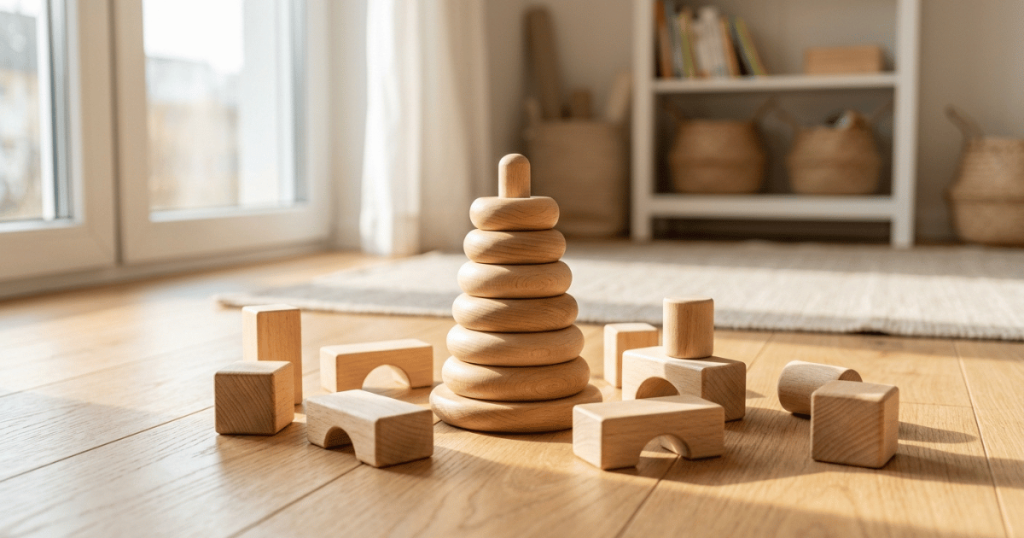
A sturdy toy that interests your child for three days can still be a disappointing purchase. I prefer toys that leave some of the play up to the child, particularly blocks, simple figures, stacking pieces, or other designs that can take on different roles as children grow.
This is often called open-ended play.
A child might stack a group of wooden pieces one day and use the same pieces as pretend food or scenery another day. Activities involving stacking, sorting, fitting, and manipulating pieces can also naturally involve skills such as hand-eye coordination and fine motor control.
You do not need every toy to teach a named skill. Play value matters on its own.
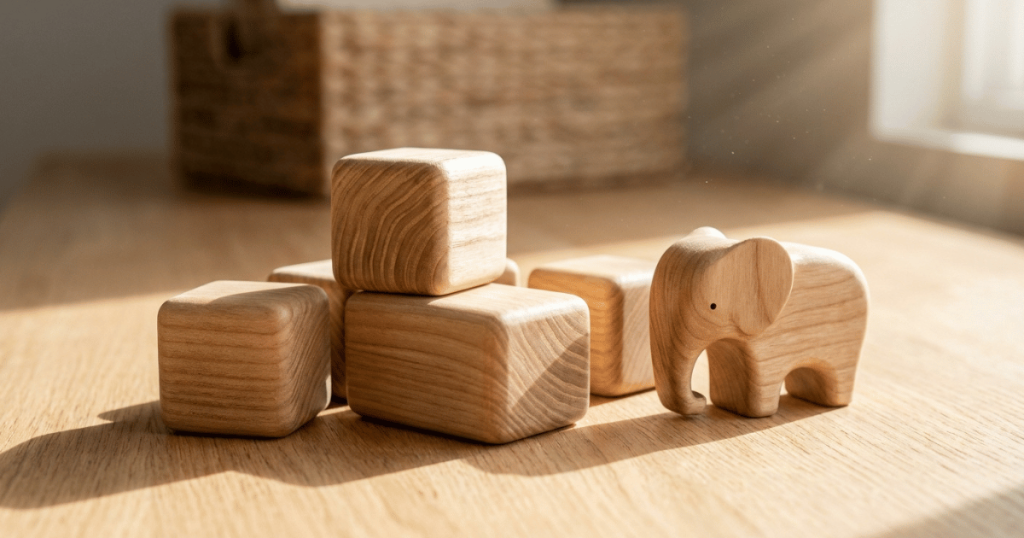
When my son was 5, a plain set of wooden blocks lasted longer in his daily play than several more complicated toys because the same rectangle could become a garage wall, a bridge, or a pretend phone depending on the day.
That flexibility is something I now consider part of value.
Watch for These Common Buying Mistakes
The first mistake is assuming expensive automatically means better quality. Price can reflect materials and craftsmanship, but it does not replace checking the actual toy.
Another is buying too far ahead.
Parents naturally want toys that children can grow into, but a toy that is frustrating now may never get the second chance we imagine it will. A little room to grow is useful, while a large developmental mismatch can leave a toy sitting in storage.
I would also avoid judging sustainability from the word “wooden” alone. If responsible sourcing matters to you, look for specific information such as FSC-certified wood or another clearly explained sourcing policy.
Finally, do not overlook condition when buying secondhand. Missing pieces, loose joints, chipped paint, cracks, unknown finishes, moisture damage, or an unavailable age label can make an older wooden toy a very different proposition from the product when it was new.
Inspect the Toy Again When It Arrives
Your buying check should continue after opening the package.
Hold each part, feel the surfaces, and check that pieces that are supposed to stay attached are secure. Compare what arrived with the age guidance and instructions you saw before purchasing.
Then keep an eye on the toy as it gets used.
Wooden toys can last for years, but they still experience wear. A hard drop can loosen a wheel. Water can affect wood, and a crack can develop where there was none before.
If a toy becomes splintered, cracked, loose, or badly chipped, remove it from play until you can determine whether it is still suitable to use.
A well-made wooden toy should earn your confidence through its actual construction and condition, not simply through the fact that it is made of wood.
Frequently Asked Questions
How can you tell if a wooden toy is good quality?
Look for smooth surfaces, sturdy construction, secure attached parts, clearly identified materials, and an intact finish. The manufacturer should also provide appropriate age and safety information.
Are all wooden toys safe for toddlers?
No. Suitability depends on the individual toy, including its size, small parts, construction, finish, and intended age range. Always follow the manufacturer’s age guidance, especially for children under 3.
Is solid wood always better for wooden toys?
Solid hardwood can be durable, but material alone does not determine the quality of a toy. Construction, finish, design, safety information, and how well the toy stands up to normal play matter too.
What should I avoid when buying wooden toys?
Be cautious about rough surfaces, splinters, loose parts, peeling finishes, unclear age guidance, and vague material descriptions. Marketing terms such as “natural” or “eco-friendly” should not replace specific product information.
Are secondhand wooden toys worth buying?
They can be, but inspect them more carefully than a new toy. Check for missing or loose pieces, cracks, chipped coatings, moisture damage, unknown finishes, and whether you can still identify the original age guidance.