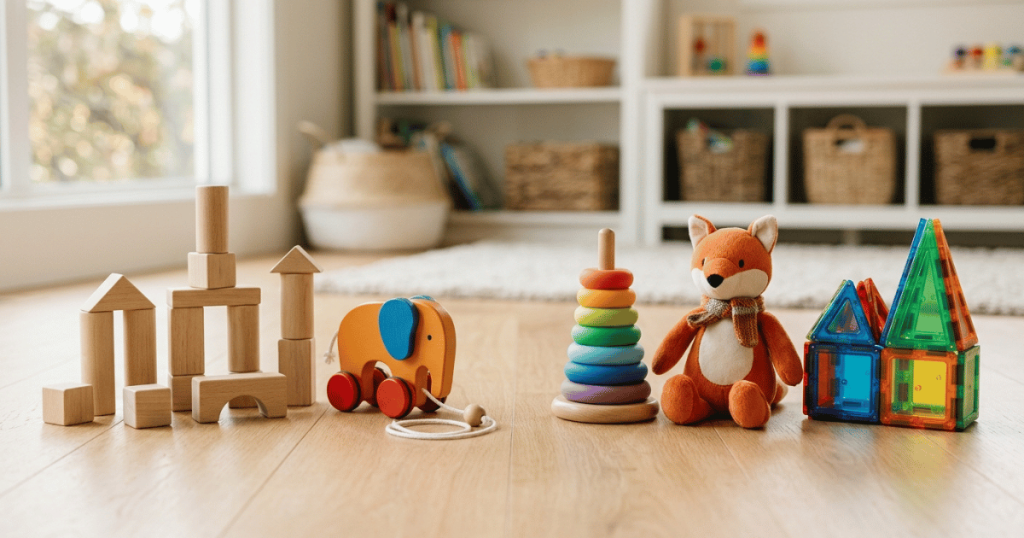
Quick Answer: Wooden toys tend to stand out for sturdy, open-ended play, silicone for soft and easy-clean use, fabric for lightweight and comforting play, and magnetic tiles for construction. None is automatically better for every child, so durability, cleaning, age suitability, safety, and the kind of play the toy encourages are more useful comparisons than material alone.
Four Materials, Four Different Everyday Experiences
After buying toys for two children, I have stopped expecting one material to handle every kind of play equally well.
A wooden block and a fabric animal may both be simple toys, but they behave completely differently in a child’s hands. Add a silicone stacker and magnetic tiles, and the differences become even clearer.
Wood is firm and usually has some weight. Silicone is flexible. Fabric is soft and compressible, while magnetic tiles use rigid pieces that connect through enclosed magnets.
Those physical differences affect much more than appearance.
They change how a toy feels when dropped, how you clean it, where you store it, what children can build with it, and how convenient it is to take away from home.
The more useful question, then, is what you need the material to do.
The Key Differences, Point by Point
Wooden toys: firm, sturdy, and simple to manipulate
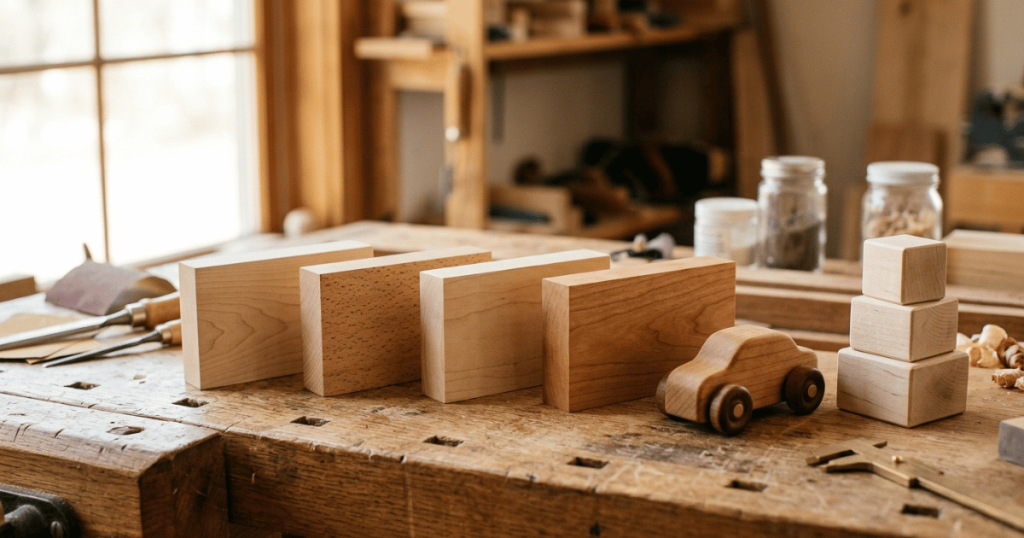
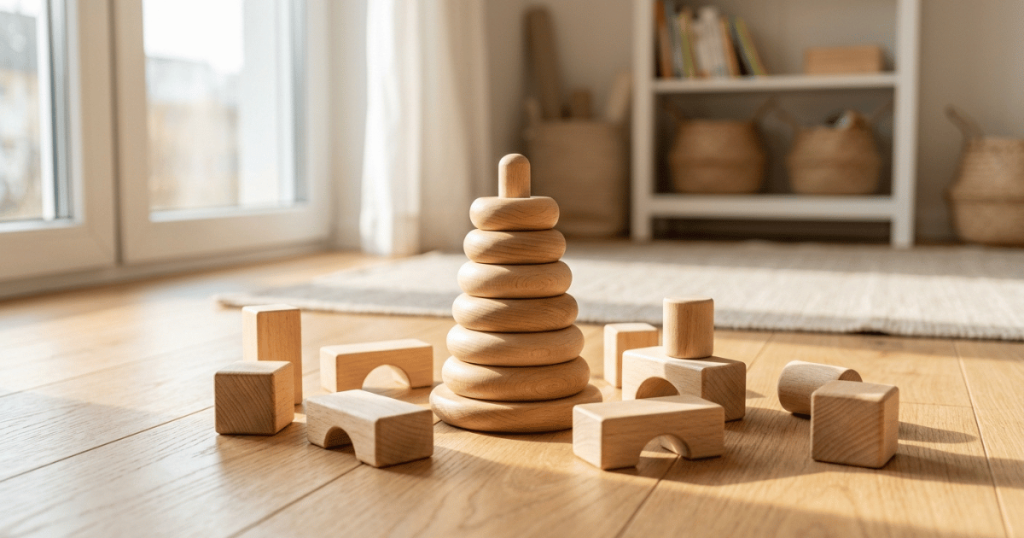
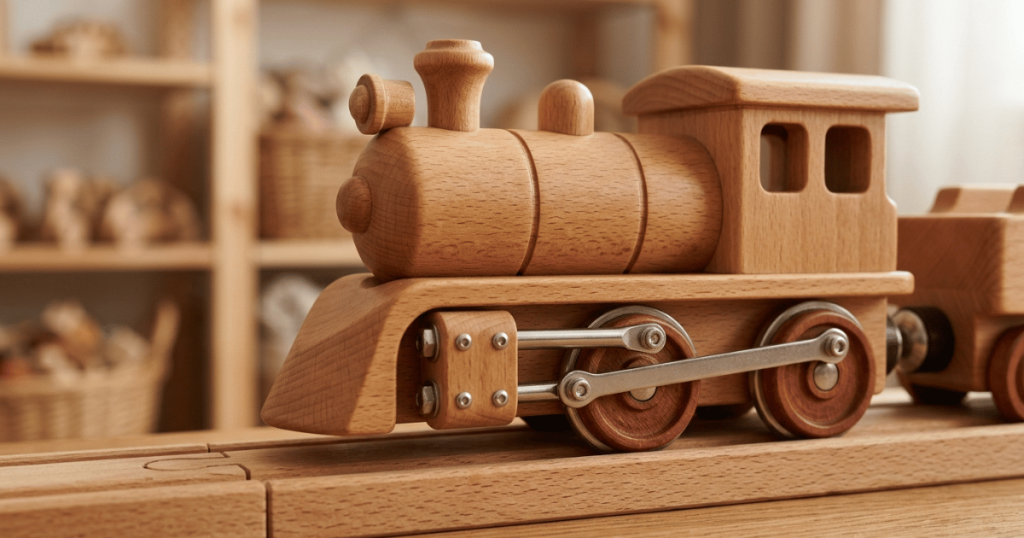
Wood works especially well for blocks, puzzles, shape sorters, figures, stacking toys, and other objects where a firm shape matters.
The weight can make wooden pieces satisfying to handle. A block stays rigid while a child turns or stacks it, which can work naturally with activities involving fine motor control, hand-eye coordination, and spatial thinking.
Well-made wooden toys can also last through years of ordinary play.
There is maintenance involved. Wood generally should not be soaked or put in a dishwasher. Manufacturer care guidance commonly recommends cleaning wooden toys with a damp cloth, using mild soap if needed, and drying them thoroughly.
They can also be noisy.
When my son was 4, dropping three chunky wooden blocks onto our hard floor produced enough noise that his sister called from the next room to ask what had fallen.
That is a small detail, but it matters in everyday family life.
Silicone toys: flexible and practical around mess
Silicone feels very different in the hand. It bends, gives under pressure, and is commonly used for teethers, stackers, sensory pieces, and toys intended for younger children.
Cleaning is one of its practical strengths.
Many silicone children’s toys can be washed thoroughly, although you should always follow the instructions for the specific product. Some manufacturers allow dishwasher cleaning or boiling for suitable silicone items, while wooden toys from the same manufacturer require much gentler cleaning.
That can be useful during the stage when nearly everything ends up in a child’s mouth or on the floor.
Silicone also tends to be quieter when dropped and more forgiving if a child accidentally bumps themselves with it.
It still needs inspection. Tears, damaged areas, or designs that trap moisture can change how practical a silicone toy is over time. Care guidance for children’s silicone toys recommends regularly checking for damage and thoroughly drying items before storage.
Fabric toys: soft, light, and easy to carry
Fabric fills a different role.
Soft dolls, cloth books, stuffed animals, and sensory fabric toys can be squeezed, carried around, cuddled, and used during quiet pretend play. They are usually much lighter than wooden toys.
That makes fabric particularly convenient away from home.
A soft toy dropped in a car or onto a bedroom floor creates little noise. It can also be easier for a small child to carry a larger fabric object than a similarly sized wooden one.
Cleaning varies greatly by construction and filling, so the care label matters.
Some plush children’s toys can be machine washed on a gentle cycle, while others need hand washing or surface cleaning. For example, HABA’s care instructions allow its plush items to be hand washed or machine washed on a gentle cycle, showing how differently fabric and wood may need to be treated.
Fabric can also show its age differently. Repeated washing may affect texture or shape, and seams need checking as the toy gets older.
Magnetic tiles: building becomes easier in three dimensions
Magnetic tiles are really a toy system rather than a single raw material. Most use rigid outer shells with magnets enclosed inside.
The magnetic connection changes the building experience.
Children can join flat pieces into walls, roofs, cubes, towers, and other three-dimensional structures without needing the balance required by traditional wooden blocks. Current comparisons between magnetic tiles and wooden blocks often highlight this difference, along with spatial and construction play.
My daughter once spent an afternoon making a tall magnetic-tile “hotel” when she was 8, then used two wooden figures as guests because the tile set itself did not provide the characters she wanted.
That mixture of materials worked better for her idea than treating the toy types as competitors.
Magnetic tiles do require one specific safety habit. The magnets should remain fully enclosed. If a tile cracks or becomes damaged enough that a magnet could come loose, it should be removed from play because swallowed magnets can cause serious internal injuries.
Durability Means Something Different for Each Material
Parents often ask which toy material lasts longest, but durability is more complicated than that.
A sturdy wooden block may survive years of stacking and dropping but can eventually chip, crack, or develop a rough area. Fabric may stay usable for a long time while gradually looking worn from washing.
Silicone does not face the same splintering problem as wood, but it should still be checked for tears or deterioration.
Magnetic tiles may tolerate repeated construction play very well, yet their safety depends partly on the outer shell remaining intact enough to contain the magnets.
So I look at durability as both physical condition and safe usability.
There is also play durability.
A toy can remain physically perfect while your child has completely outgrown it. On the other hand, a simple wooden block, fabric animal, or magnetic building piece may stay interesting because children can give it a new role.
That replay value is worth considering alongside physical lifespan.
Cleaning May Be the Biggest Practical Difference
If your child is in a stage where toys constantly get sticky, cleaning can matter as much as play value.
Wood generally needs the most caution around water. A quick wipe and proper drying are usually more suitable than soaking.
Many silicone toys are much more tolerant of water and frequent washing.
Fabric sits somewhere else entirely because construction determines the cleaning method. A machine-washable soft toy can be very convenient, while a surface-clean-only item may take more effort.
Magnetic tiles should follow their manufacturer’s cleaning directions, particularly because they contain enclosed components.
The easiest routine is the one you will actually follow.
When my children were younger, I quickly learned that a toy requiring careful cleaning was less convenient for snack-time or outdoor play than one I could clean without much thought.
That did not make the harder-to-clean toy worse. It simply gave it a different place in our house.
How the Play Experience Changes
Material affects what children can physically do with a toy.
Wooden blocks rely heavily on balance and gravity. If the structure leans too far, it falls.
Magnetic tiles add a connecting force, so children can build shapes that would be difficult to create from loose blocks. This can make three-dimensional construction particularly approachable.
Silicone can bring squeezing, bending, texture, and mouthing into play depending on the toy’s design.
Fabric is especially suited to soft pretend objects, dolls, characters, and comfort toys. It can also include different textures for sensory exploration.
No material owns a particular developmental benefit.
A child’s problem-solving comes from the problem they are working on. Fine motor practice comes from what their hands are doing. Imaginative play comes from the meanings and stories they create.
That is why the individual toy design matters at least as much as the material.
Think About Where the Toy Will Be Used
The same family may reasonably prefer different materials in different places.
For a playroom floor, the weight of wooden toys may not bother you. In a travel bag, a lighter fabric or silicone item can be easier to carry.
Noise matters too.
Wooden pieces falling onto hard floors can be loud. Silicone and fabric are usually much quieter. Magnetic tiles sit somewhere in between depending on their construction and how enthusiastically they are being used.
Storage creates another difference.
Fabric compresses. Silicone pieces may flex or stack. Wooden blocks keep their full shape, while a large magnetic-tile collection can take up surprising amounts of space once it grows.
These details sound ordinary because they are.
They are also the details parents deal with every day after the excitement of buying a toy has passed.
You Do Not Have to Pick One Material
Our toy shelf has never worked best when every object is trying to do the same job.
Wood can provide sturdy blocks and puzzles. Fabric can provide soft characters for the stories built around them. Silicone can make sense for younger children who need flexible, washable objects, while magnetic tiles can open up a different style of construction.
Materials can complement each other.
A child might build a wooden road leading toward a magnetic-tile house and then put a fabric animal inside. At that point, asking whether wood or magnetic tiles “won” the comparison does not tell us much about the play.
When choosing any toy, I would start with age suitability and safe construction. Then think about how your child plays, where the toy will be used, how often it will need cleaning, and how much maintenance you are comfortable with.
Inspect toys as they age too.
Look for cracks or rough areas in wood, damaged seams in fabric, tears in silicone, and damaged magnetic tiles. Any toy that has changed enough to create a safety concern should come out of play.
A mixed collection can make much more sense than trying to find one perfect material.
Frequently Asked Questions
Are wooden toys more durable than silicone toys?
Well-made wooden toys can last for years, but both materials can be durable when properly made and cared for. Wood may chip, crack, or develop rough areas, while silicone should be checked for tears or other deterioration.
Are silicone toys easier to clean than wooden toys?
Often, yes. Many silicone children’s toys tolerate thorough washing, while wooden toys generally need to be wiped with a damp cloth and dried promptly rather than soaked. Always follow the individual manufacturer’s care instructions.
Are magnetic tiles better than wooden blocks?
They offer different building experiences. Wooden blocks depend on balance and gravity, while magnetic tiles connect together and can make certain walls and three-dimensional structures easier to build.
Are fabric toys better for babies?
Soft fabric can be useful for lightweight, quiet, and comforting toys, but material alone does not determine whether something is appropriate for a baby. Check the toy’s age guidance, construction, attached parts, and care instructions.
Can children play with wooden toys and magnetic tiles together?
Yes. Different toy materials can work together naturally in open-ended play, such as using wooden figures or blocks inside structures made from magnetic tiles. For magnetic toys, regularly inspect the pieces and stop using damaged tiles that could expose a magnet.