Quick Answer: BRIO trains are expensive because you are paying for more than a basic wooden train set. The price reflects durable beech wood tracks, carefully made components, safety and quality standards, an expandable railway system, and a brand that has been developing wooden railways since 1958.
A Lot of the Cost Is in the Materials and Finish
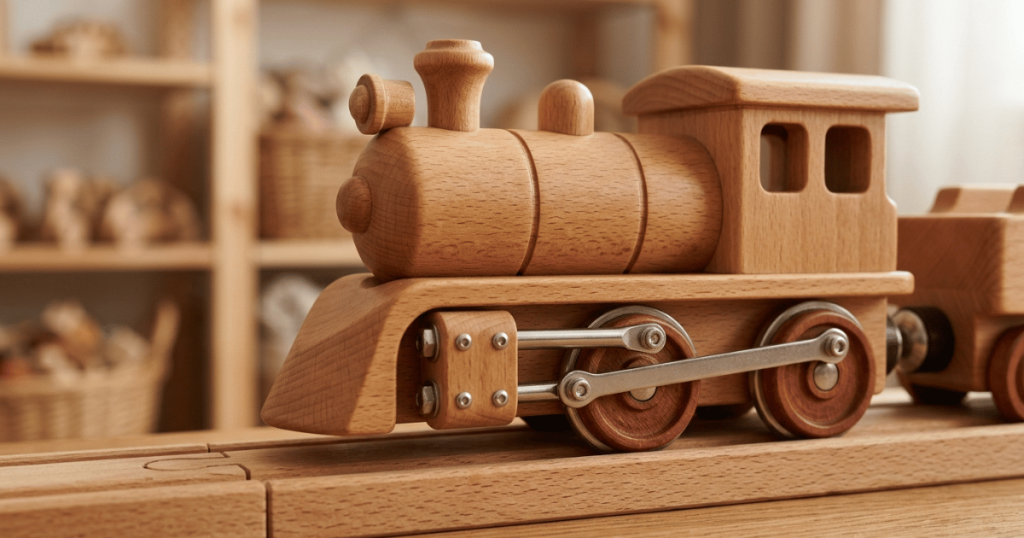
BRIO wooden toys are mostly made with beech, a hardwood the company describes as durable and difficult to break. Its wooden toys also use FSC-certified wood from responsibly managed sources.
The track itself is where you can notice some of the difference. BRIO track is machined to create smooth surfaces and carefully shaped grooves, and the hardwood helps it resist the dents and damage that wooden track can pick up during play.
That extra attention to an ordinary-looking piece of track is easy to miss when you first see the price.
When my son was five, I learned how much track fit matters after watching him repeatedly push a little engine through the same curve and get annoyed whenever the pieces shifted apart. Small differences in fit can matter quite a bit when a child is actually playing on the floor.
You Are Buying Into a Railway System
BRIO’s price makes more sense when you stop looking at each box as an isolated toy.
BRIO introduced its miniature railway system in 1958. Today, BRIO World railway products remain designed as an expandable system, and BRIO says its World, Classic, and My First Railway lines are compatible with each other.
That means a small starter railway does not necessarily become useless when your child wants something more complicated. You can add track, trains, bridges, stations, crossings, and other pieces instead of replacing the original set.
I saw this with my daughter when she was younger. A simple oval track eventually became much more interesting once she could change the layout herself instead of playing with the same fixed loop.
For a family that keeps adding to the railway over several years, compatibility can have real value.
Modern BRIO Is More Than Wooden Track
The phrase “wooden train” can also make the price confusing because not every component in a modern BRIO railway is simply a shaped piece of wood.
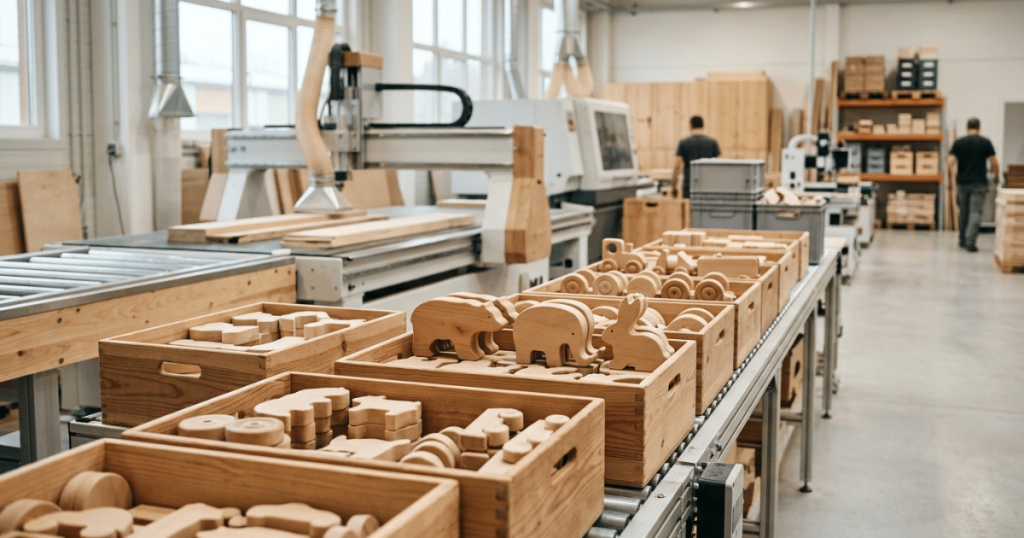
The company uses European beech alongside high-quality plastics, and its range includes magnetic couplings, battery-powered engines, lights, cranes, signals, and other functional accessories.
A basic track expansion and an interactive railway set therefore have very different manufacturing requirements.
Some of the price of a larger BRIO set comes from those moving or electronic parts rather than from the wooden track alone.
Safety and Quality Control Add Another Layer
Children’s toys have to meet safety requirements, and BRIO says it applies its own strict testing requirements, which in many cases go beyond the applicable legal requirements.
That matters for a toy that may be pushed, dropped, pulled apart, and handled repeatedly.
It does not mean a BRIO toy can never break or that another brand is unsafe. It means part of what BRIO sells as a premium brand is consistency in materials, construction, and its approach to safety.
Parents should still follow the age guidance for the particular set and inspect toys as they wear.
Part of the Price Is Simply the BRIO Name
There is also a brand premium.
BRIO traces its company history to 1884 and its miniature railway to 1958. Decades of recognition in the wooden railway category allow an established brand to command a higher price than many newer or less familiar alternatives.
You should not assume that every extra dollar therefore buys an equal improvement in play.
For one child, a BRIO railway might be played with for years and expanded repeatedly. For another, trains may hold their attention for a few months before ending up in a storage box. The value looks very different in those two situations.
Does the Higher Price Make Sense for Your Family?
I would look at expected use before focusing on the BRIO logo.
If your child repeatedly builds train layouts, enjoys changing tracks, and is likely to keep using the system, durability and expandability become more meaningful. If you are unsure whether trains will become a lasting interest, paying the full premium for a large collection immediately may make less sense.
There is also a middle ground.
Used BRIO is widely traded, and parent discussions regularly mention buying secondhand track and collections as a less expensive way to expand. Older pieces should always be checked for condition before being given to a child.
So, why are BRIO trains so expensive? Better materials and detailed manufacturing explain part of it. Safety standards, system compatibility, functional components, and decades of brand recognition contribute too.
Whether those things justify the price depends mostly on how much use your family will get from them.
Frequently Asked Questions
Are BRIO trains made of real wood?
BRIO uses real wood, particularly beech, in its wooden products and railway tracks. Modern BRIO railway products can also contain high-quality plastic, magnets, metal components, and electronics depending on the item.
Why is BRIO track so expensive?
BRIO track uses durable beech wood and is precisely machined for smooth surfaces, grooves, and connections. You are also paying for compatibility with the wider BRIO railway system.
Do old BRIO tracks work with new BRIO trains?
BRIO has maintained its railway concept for decades, and its current World, Classic, and My First Railway ranges are compatible with one another. With genuinely old or secondhand pieces, check their condition and exact identity before assuming compatibility.
Is secondhand BRIO a cheaper option?
It can be. Used BRIO collections are commonly sold, sometimes allowing families to obtain considerably more track and accessories for their budget, but check wooden pieces, connectors, trains, and electronic components for wear or damage before use.