Quick Answer: Wooden toys can give children enjoyable options during screen-free time, but buying them does not automatically change media habits. Their usefulness depends on whether the activities suit your child and fit into a realistic family routine.
What wooden toys can actually contribute
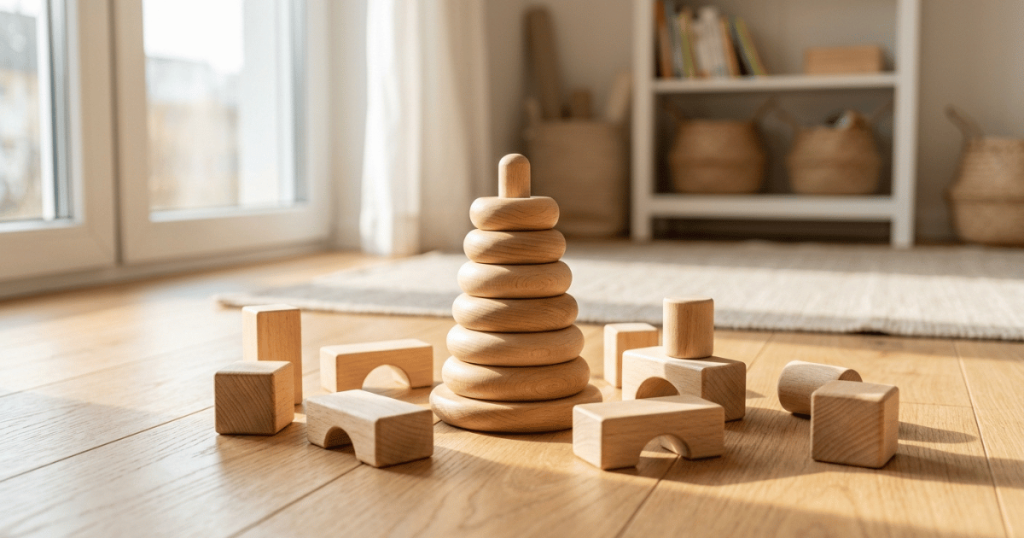
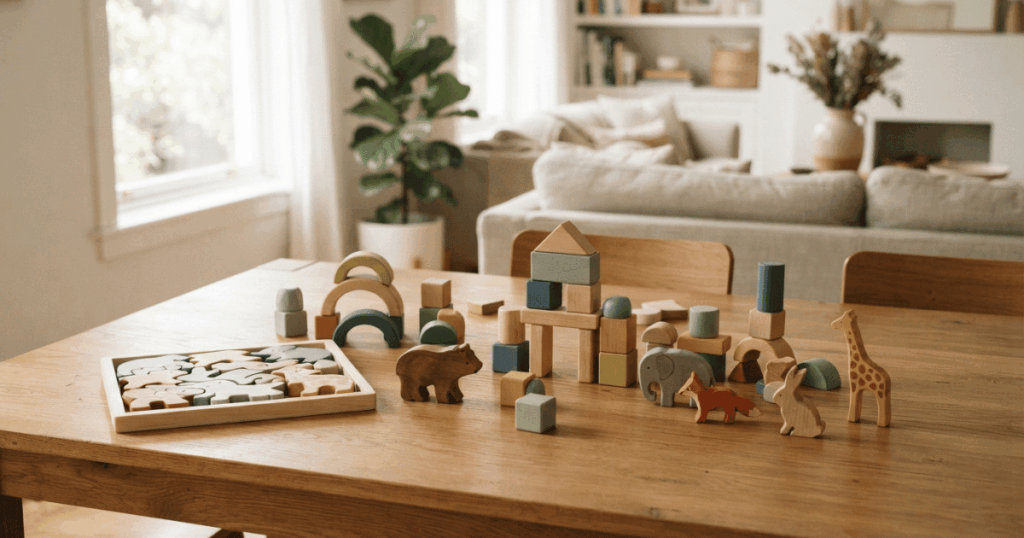
A set of wooden blocks gives a child something physical to arrange and change. The tower responds to their movements, and the next attempt can be different from the last. This makes blocks one possible starting point for open-ended play, where there is more than one way to explore.
The material does not create the experience by itself.
A suitable puzzle offers practice turning pieces and matching shapes. Building involves fine motor skills, the small hand movements used to handle objects. Pretend play can bring conversation into the activity when a child invites someone else to join.
These opportunities also exist with other materials. We can make room for wooden toys without expecting them to replace every other kind of play.
The more useful question is whether your child has activities they can enjoy away from a screen.
Look at what the screen is doing in your day
Before reducing screen time, notice when it happens. Perhaps a video keeps your child occupied while you cook. Perhaps watching together has become part of the evening after a tiring day.
Those situations need different plans.
If you need to prepare dinner, an activity requiring constant adult help may be difficult to sustain. A familiar, age-appropriate toy near a safe area could be more practical. You still need supervision that suits your child and the setting.
If your child is seeking closeness after a long day, placing a puzzle beside them may miss the immediate need. A little time together could come before any invitation to play.
We can plan more effectively when we understand the moment we are trying to change.
Choose one predictable opportunity for play
Trying to redesign the whole day can make a manageable goal feel exhausting. Start with one period when screen-free play could fit naturally. Keep the change specific enough that other caregivers can understand it.
For example, the television might remain off during the first part of a weekend morning.
Set out a familiar activity before that time begins. A few wooden vehicles beside a simple block road may be enough. There is no need to prepare a different themed activity every day.
Keep other options available too. Your child may prefer a book or want to move around. The purpose is to create room for enjoyable offline experiences rather than require a particular toy.
Repeat the arrangement when it works, and adjust it when it does not.
Help the transition before expecting independent play
Stopping an enjoyable video and starting a new activity are two separate tasks. A child may need help with the first before being ready for the second. Having a wooden toy nearby does not remove that transition.
Explain the stopping point in advance using language your child understands.
You might say, “After this episode, the tablet is going away. Then we can build the garage.” Keep the plan clear and avoid allowing another episode to begin automatically. A timer can be useful for some children, while others respond better to a clear ending within the activity.
When the screen goes off, acknowledge disappointment without requiring immediate enthusiasm. Your child can be unhappy about stopping and still become interested in something else later.
Offer a simple invitation once they are ready.
If they want company, join briefly. Place a block or take a role they offer, then give them space to shape the play. Avoid turning the new activity into a test of whether the screen-time change has succeeded.
Make play easy to start
An appealing activity can still fail if the useful pieces are difficult to find. Keep a manageable selection accessible, with enough space to use it. A complete small setup may be more inviting than an overflowing basket.
Remove unnecessary preparation.
For a building activity, a stable surface can help prevent repeated collapses. For a puzzle, place the pieces where your child can see them. Follow the toy’s age guidance and keep unsuitable small parts away from younger children.
Consider the child’s existing interests. A favorite figure might need a wooden block house, or a familiar vehicle might deliver pretend parcels. Combining toys safely can make an existing collection useful in new ways.
We do not need a perfectly coordinated wooden playroom to offer a worthwhile alternative.
Keep the rest of the day in view
A table full of toys cannot meet every need. Children also need opportunities for movement and time with other people. Screen-free time can include ordinary family activities rather than another seated task.
A walk may suit the moment better than a puzzle.
Likewise, protecting sleep involves the wider evening routine. A lively building game immediately before bed may not be the most practical choice for a child who finds it hard to stop. Choose the activity around the purpose of that part of the day.
Look at the overall pattern instead of treating every offline minute as equally useful. A balance that works should leave room for rest as well as play.
Adult habits belong in the plan
Children notice when screens remain central to everyone else’s attention. If we invite them to build while repeatedly checking our phones, shared play can become fragmented. A brief period of available attention may be easier to manage than promising an uninterrupted afternoon.
Make a commitment you can keep.
Put your phone aside during that shared period when practical. If you need to answer an important message, explain briefly and return to the interaction. The aim is a workable family habit.
It also helps when caregivers agree on the basic routine. Consistent expectations reduce the need to renegotiate the same stopping point each day. Revisit the plan when work or family circumstances change.
Notice progress without demanding a perfect replacement
An initially successful play session may be short. That does not mean the toy failed or your child cannot enjoy offline activities. Interest varies with the activity and how the day has gone.
Watch for useful changes.
Perhaps your child begins choosing blocks without prompting. Perhaps putting the tablet away becomes less uncertain because the next part of the day is familiar. These observations tell us more than expecting one toy to occupy a child for a fixed length of time.
Avoid describing ordinary resistance as “screen addiction” or expecting wooden toys to treat a problem. If media use is persistently disrupting sleep or everyday family life, discuss the situation with your child’s healthcare professional.
A toy can support the routine, while the routine does the larger work.
Frequently Asked Questions
Can wooden toys help reduce screen time?
They can provide an appealing activity during planned screen-free periods. Whether that changes media use depends on your child’s interests and the family routine surrounding them.
Are wooden toys better than other toys for screen-free play?
There is no need to limit offline play to wood. Choose suitable activities your child enjoys, whether they involve blocks, books, or other materials.
What if my child refuses a toy after the screen goes off?
Allow time for the transition and acknowledge their disappointment. Offer a manageable next activity without demanding that they enjoy it immediately.
Should I buy new toys before changing our screen routine?
Start with what you already have. A familiar activity with an easier setup may be more useful than introducing several new purchases.
How long should my child play independently?
There is no single duration that suits every child or activity. Begin with realistic expectations and provide support and supervision appropriate to your child.