Quick Answer: Buying secondhand wooden toys can make sense when you can identify the product, check for recalls, and confirm that it is complete and undamaged. Skip toys with peeling paint, splinters, or unresolved questions about their suitability, especially when shopping for children who mouth toys.
Start with the toy’s identity, not the price
An inexpensive wooden toy can look like an easy decision. Before arranging collection, find out exactly what it is. Identifying the product helps you locate its instructions and distinguish it from similar-looking models.
Ask for a photograph of the label or markings underneath.
Useful details include the manufacturer’s name and model number. A production date or batch code may also help narrow a recall search. Keep the listing photographs until you have checked the item yourself.
We should not assume the seller has already researched it. “My children used it without problems” describes their experience, but it cannot establish whether the product has been recalled.
If you cannot identify a toy well enough to resolve important safety questions, passing on it is reasonable.
Ask a few practical questions before collection
A short conversation can save a wasted trip. Ask whether the toy has been repaired or repainted, and whether any original components are missing. Request close-up photographs when the listing shows only a distant view.
The aim is to understand what you will inspect.
Questions worth asking include:
- Is the pictured item the exact toy being sold?
- Are the original instructions available?
- Has anything been glued or replaced?
- Has it been stored somewhere damp?
- Are there loose parts or damaged areas?
An honest seller may not know every answer. That uncertainty matters when it affects your ability to judge the item, even if nobody has deliberately hidden a problem.
For online purchases, also check whether you can return an item that arrives in a different condition from the description.
Separate cosmetic wear from damage
A faint surface scuff does not have the same implications as a split beside a wheel axle. Look closely at the location and nature of the wear. The question is whether it affects how the toy can be handled or used.
Inspect the underside as carefully as the front.
Check exposed edges for splinters and examine joints for separation. Look around handles or other narrow sections where damage may be less obvious. Do not force parts apart or put weight on a toy to conduct an improvised strength test.
A toy that moves normally can still have a damaged attachment.
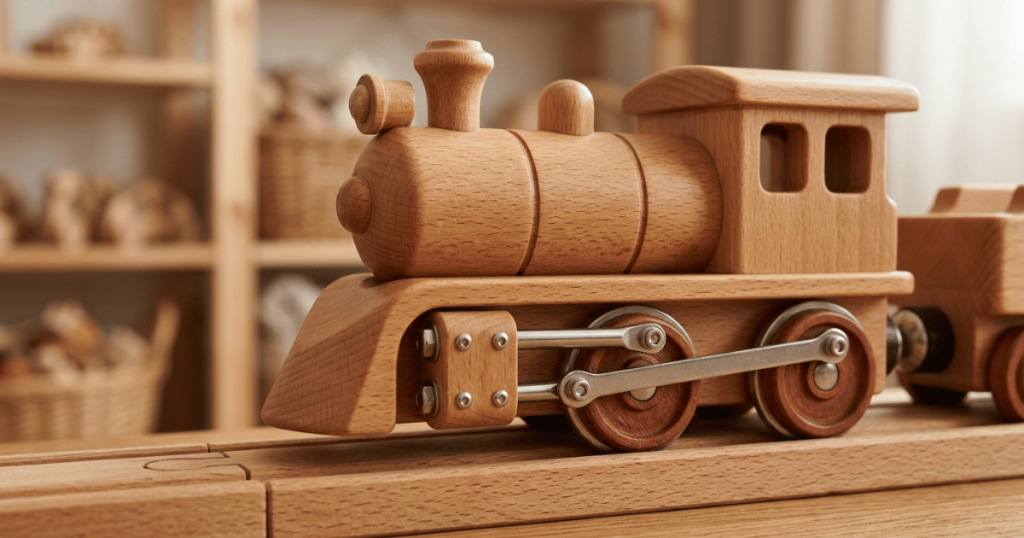
For example, a wooden train carriage might roll even though the wood around a wheel is cracked. The movement does not settle whether that component will remain secure. Keep damaged items out of play while seeking manufacturer guidance.
Be particularly cautious with older painted toys
Paint condition matters, but intact paint does not answer every question about an old toy. Some vintage coatings may contain substances that would not be acceptable in a modern children’s product. You cannot establish their composition from color or appearance.
A family keepsake is not automatically suitable for current play.
Avoid buying an unidentified older painted toy with the plan to sand it back at home. Disturbing an unknown coating can create additional exposure concerns. Painting over it also does not establish that the original material or construction is appropriate.
Home lead-testing kits have limitations and cannot provide the same information as suitable laboratory testing. A negative home result should not be treated as a general safety certificate.
We can appreciate a vintage object without putting it into a young child’s toy basket.
Work out what missing pieces actually mean
An incomplete set needs closer consideration than a simple piece count. A missing decorative figure may leave an otherwise usable play set. A missing fastener can make assembly unsafe or incomplete.
Those are different purchasing decisions.
Compare the contents with the manufacturer’s instructions where available. Check whether the remaining pieces can be used as intended and whether an original replacement is available. Avoid substituting household hardware without product-specific guidance.
A puzzle with a missing piece may simply be frustrating. A ride-on toy with a missing axle fitting raises a different concern. Large toys that support a child’s weight deserve particular care because hidden damage or unsuitable repairs may be difficult to assess.
If essential information or components are unavailable, the low price may offer little value.
Cleaning comes after suitability checks
A toy can look freshly cleaned while still having peeling paint or a loose wheel. Resolve those concerns before thinking about how to wash it. Cleaning does not reverse a recall or restore the strength of damaged wood.
Find the care instructions first.
Follow the method specified for that toy rather than assuming every wooden surface tolerates the same treatment. Unless the manufacturer permits it, avoid soaking or putting wooden toys in a dishwasher. Different finishes and glued constructions can respond differently to moisture.
Check for swelling or separated layers before use. Persistent signs of damp storage deserve caution, especially when you cannot establish the extent of the problem.
Do not buy a questionable toy on the assumption that disinfectant will make everything right.
Apply the same checks to hand-me-down toys
A relative may know a toy’s history better than an online seller. That can be helpful when asking about repairs or storage. It still makes sense to identify the product and inspect its present condition.
Time changes both toys and safety information.
A wooden activity set may have been complete when it went into storage but emerge with a loose attachment. Instructions can also become separated from the toy. Check again before giving it to another child, even if it belonged to an older sibling.
Be clear when declining something unsuitable. You can appreciate the offer while explaining that you cannot confirm the toy’s age guidance or condition.
There is no obligation to accept an item because it is free.
Decide whether the saving is real
Compare the asking price with the cost of making the toy ready for its intended use. Include any approved replacement parts and the effort needed to obtain instructions. Avoid treating an uncertain repair as a guaranteed saving.
We should also consider whether the child will use it.
A familiar type of activity in sound condition may be a more sensible purchase than an impressive set that does not match current interests. Buying fewer useful toys can be easier to manage than collecting bargains that need work.
Before paying, confirm that you are satisfied with the item’s identity and condition. If the seller pressures you to overlook a concern, you can leave without buying.
Pass toys on with the same care
When donating wooden toys, check them as thoughtfully as you would when buying. Keep identifiable pieces together and include instructions when available. Tell the recipient about missing nonessential items rather than leaving them to discover the gaps.
Donation should not transfer an unresolved hazard.
Check current recall information before passing a toy on. If it is recalled, follow the stated remedy or disposal instructions. Ask the receiving organization what it accepts before leaving a box of used toys.
A smaller donation of usable items is more helpful than a mixed bag requiring someone else to sort out damage.
Frequently Asked Questions
Are secondhand wooden toys safe for toddlers?
Some can be suitable when their identity and age guidance are clear and they remain in sound condition. Follow small-parts warnings and reject damaged or recalled items.
Should I buy a wooden toy if its label is missing?
A missing label can make recall checks and age verification difficult. If you cannot obtain reliable identifying information elsewhere, skip the purchase.
Can I repaint an old wooden toy to make it safe?
Repainting does not establish the safety of an unknown coating or fix structural damage. Seek product-specific advice before altering a toy, and avoid sanding unidentified old paint.
How should I clean used wooden toys?
Follow the manufacturer’s instructions for the particular finish and construction. Check suitability and condition before cleaning, then inspect again before play.
Can I donate a wooden toy with a missing piece?
It depends on what is missing and the organization’s acceptance policy. Disclose incomplete contents, and do not donate an item missing a component needed for safe use.