Quick Answer: Wooden toys can be an environmentally responsible choice when their wood comes from responsibly managed sources and they remain useful for years. However, the material alone cannot tell you a toy’s overall impact, because manufacturing, finishes, packaging, and disposal also matter.
Why wooden toys can have an environmental advantage
Wood is a renewable material, meaning trees can grow again after harvesting. That gives it a potential advantage over materials made from finite fossil resources. The environmental benefit depends on how forests are managed, including whether harvesting protects habitats and allows forests to regenerate.
A wooden toy still takes resources to produce.
The wood must be processed before it becomes a finished plaything. Manufacturing uses energy, and additional components bring their own environmental costs. The Sustainability Consortium identifies both manufacturing emissions and deforestation risks as relevant issues for wooden toys.
Research supports a qualified answer rather than a blanket promise. A life cycle assessment, which examines impacts across a product’s life, found that the wooden toy cars studied performed better than plastic cars in several environmental categories and worse in others. Those findings concern the particular products and conditions assessed, rather than every wooden toy on a shelf.
For a household decision, we can use that evidence as a reason to look beyond the material name.
What responsible wood sourcing looks like
“Natural wood” tells you little about where a toy’s material came from. A more useful description identifies the sourcing approach and provides evidence behind it. Forest certification can help make that information more specific.
The Forest Stewardship Council, usually shortened to FSC, uses three main labels:
- FSC 100%: The forest-based material comes from FSC-certified forests.
- FSC Mix: The material combines eligible certified, recycled, and/or controlled sources.
- FSC Recycled: The forest-based material is verified as recycled.
These labels describe different sourcing routes, so FSC Mix does not mean the same thing as FSC 100%.
Read what the claim actually covers.
If a product description mentions certified cardboard packaging, that alone does not establish the source of the wooden toy inside. We would look for a clear statement about the toy itself before treating the packaging claim as evidence about its wood.
Recycled materials can also be useful, but the description should explain which component contains them. “Made with recycled materials” might refer to a box rather than the main product.
A toy’s useful life matters more than its appearance
A wooden toy can look sturdy while depending on one fragile connection. For example, a vehicle may have a solid body but become unusable when an axle breaks. Before calling something durable, consider which part is most likely to fail and whether that part can be replaced.
Repairability gives durability practical meaning.
Useful questions include whether replacement pieces are available and whether the toy still works if a decorative part wears out. A simple construction can help, although simplicity alone does not guarantee quality.
We should also consider how well the toy fits a child’s interests. Blocks can become a bridge during one play session and a pretend shop during another. That flexibility gives children different ways to use the same pieces, but no material guarantees that a particular child will enjoy a toy.
A beautiful object that stays untouched still used resources to reach your home.
Keeping existing toys can be the better starting point
There is no need to replace a useful plastic toy simply to create an all-wood collection. If it remains suitable and your child still enjoys it, keeping it in use avoids an unnecessary purchase. You can apply your environmental priorities when a genuine need arises.
This approach also takes pressure off the family budget.
The US Environmental Protection Agency places source reduction and reuse above recycling in its waste-management hierarchy. In everyday terms, avoiding an unnecessary new item deserves attention before deciding how its packaging will be recycled. US EPA
Consider a child who already has a complete pretend kitchen. Adding wooden versions of every existing accessory may increase the collection without adding much play value. Waiting until something wears out creates a more deliberate opportunity to choose a replacement.
Finishes and extra components need separate attention
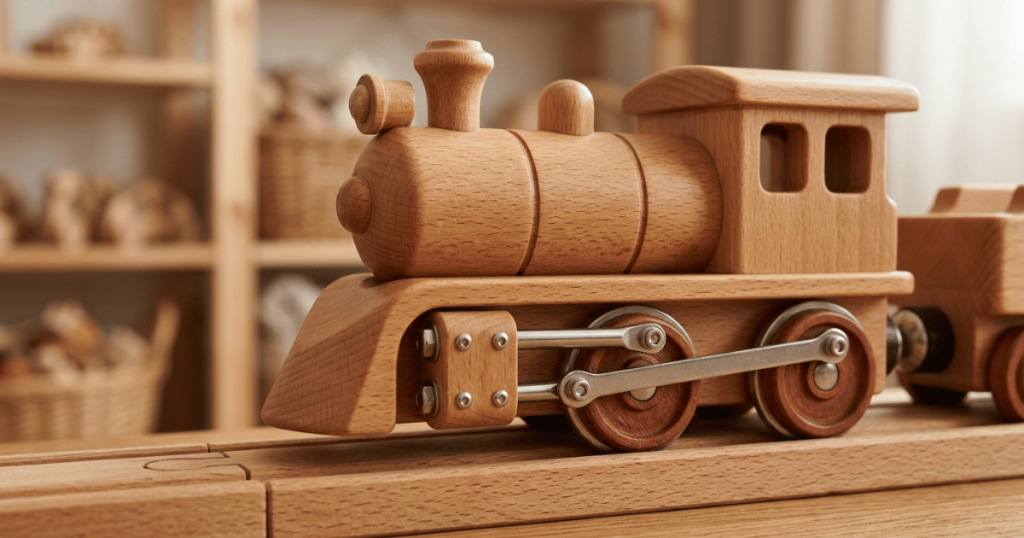
“Wooden” does not necessarily mean entirely wood. A puzzle may include glued layers, while a train may contain magnets and metal axles. These features can be useful, but they complicate broad claims about a plastic-free or biodegradable product.
Environmental information and safety information should be checked separately.
A forestry label addresses sourcing; it does not, by itself, establish that a toy is suitable for a particular child. Likewise, phrases such as “natural finish” provide limited information unless the manufacturer explains the materials and intended use.
We should avoid judging a finish by color alone. An unpainted surface does not establish responsible sourcing, and a brightly painted surface does not establish poor environmental performance. Clear product information is more useful than a particular playroom aesthetic.
The Sustainability Consortium also identifies material safety as an issue manufacturers must address for finished wooden toys.
Packaging and transport are part of the footprint
A small wooden toy can arrive inside several layers of packaging. Some protection prevents damage, which matters because a broken delivery may require a replacement. However, an oversized presentation box adds material without necessarily extending the toy’s useful life.
Look for enough packaging to protect the product without unnecessary extras.
Transportation also contributes to a toy’s carbon footprint, meaning the greenhouse gas emissions associated with its life. Distance is only one factor, so a local address alone cannot establish the lowest-impact option. A reliable comparison needs information about the wider production and delivery process.
The toy-car study illustrates why context matters: changing transport and disposal assumptions changed the calculated environmental impacts.
Plan for what happens when play ends
Before buying, consider whether another child could realistically use the toy later. A complete set with identifiable pieces is easier to pass on than an incomplete collection of loose parts. Keeping assembly information can also make a future hand-me-down more useful.
Reuse is most valuable when the next household actually wants the item.
Disposal requires a separate check. A toy containing paint or glued components should not automatically be treated like untreated garden wood. Its local recycling or composting options depend on the materials and the receiving service’s rules.
The word “biodegradable” is not a disposal instruction.
Check the manufacturer’s information and your local service before putting a broken toy into a particular waste stream. “Zero waste” is a demanding claim, and a wooden appearance alone provides no evidence that a product meets it.
Frequently Asked Questions
Are wooden toys always better for the environment than plastic toys?
No. The comparison depends on the specific products and how they are made and used. Research has found environmental advantages for the wooden toys studied, alongside disadvantages in some impact categories.
Does FSC certification mean a wooden toy is recycled?
Only the FSC Recycled label establishes that the forest-based material is recycled. FSC 100% and FSC Mix describe different material sources.
Should I replace plastic toys with wooden ones?
You do not need to replace toys that remain useful. Keeping existing items in use follows the waste-reduction priority of avoiding unnecessary consumption before relying on recycling.
Can wooden toys go in household recycling?
Do not assume your collection service accepts them. Check local instructions and explain whether the toy contains coatings or other materials.
What should I check first when assessing an eco-friendly claim?
Start with a specific statement about the wood’s source, then consider likely lifespan and repair options. Broad words such as “green” offer less useful information than a clear explanation of the product’s materials and construction.