Quick Answer: Start by checking the care instructions and removing loose dust with a soft, dry cloth. Clean each material separately, use a barely damp cloth only where permitted, and let any damp pieces dry completely before storing them.
Check the pieces before choosing a cleaning method
A wooden train set usually contains more than wood. Painted carriages may sit beside unfinished track, while an engine may contain electronics. The same cleaning treatment may not suit all three.
Sort the set before you begin.
Separate plain wooden track from decorated pieces and powered engines. Check for stickers or fabric details that may need their own care. If your collection mixes manufacturers, follow the instructions for each item rather than assuming track compatibility means identical cleaning requirements.
Inspect the condition as you sort. Put cracked track or a carriage with a loose wheel aside. Cleaning should not become a way to return damaged components to play without addressing the problem.
We can leave harmless cosmetic wear alone when removing it would risk damaging the toy.
What to have ready
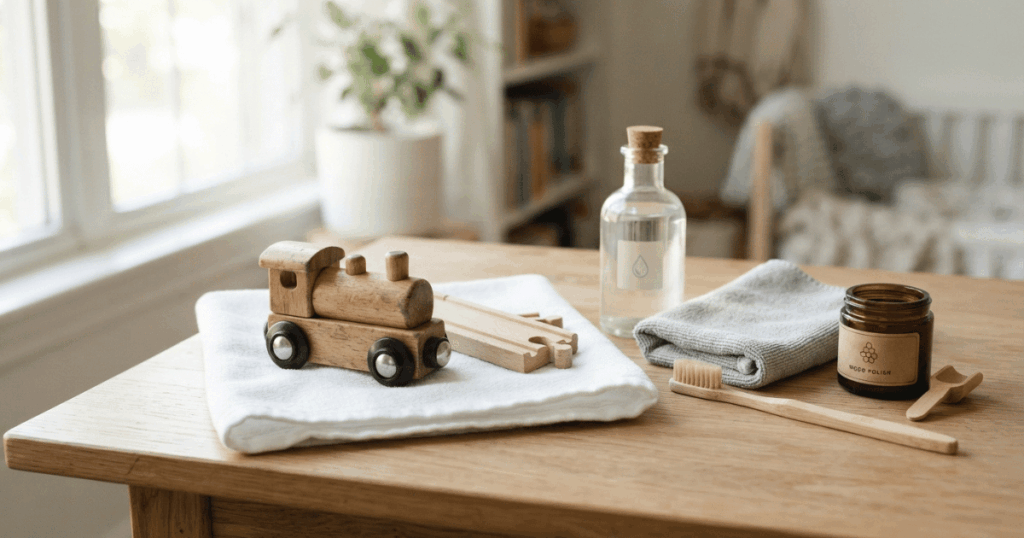
For routine cleaning, start with a soft, lint-free cloth and a small soft brush. Keep another clean cloth available for wiping away permitted moisture. A clear work surface makes it easier to inspect each piece.
Most of the set may need only dry cleaning.
Have water or mild soap ready only if the relevant instructions allow them. Avoid preparing a bowl for soaking the pieces. Work away from children when using tools to remove debris around wheels.
For a large collection, clean in small groups. This helps prevent a damp piece from disappearing beneath a pile of track before it has dried.
Step-by-step: how to clean a wooden train set
Step 1: Take apart the layout carefully
Disconnect the track without twisting or forcing tight joints. Put vehicles and scenery in separate groups. Photograph the layout first if your child wants to rebuild it later.
Do not force a stuck connection.
Check whether dirt is blocking the joint or whether the wood appears swollen. A damaged connector needs assessment rather than extra pressure.
Step 2: Remove loose dust and crumbs
Wipe each piece with a dry cloth. Use a soft brush to lift crumbs from track grooves and around raised details. Work gently near printing or stickers.
Clean the underside too.
Keep brushing light rather than scrubbing at one spot. A hard tool can mark the wood or damage a connection. If debris will not come away easily, check the permitted cleaning method before continuing.
Step 3: Spot-clean only where the instructions permit
Some manufacturers allow a lightly dampened cloth; others specify dry wiping for wooden surfaces. Follow the guidance for your particular piece. If damp wiping is allowed, wring the cloth thoroughly so it does not drip.
Apply moisture to the cloth rather than spraying the toy.
Work on the dirty area without flooding joints or openings. If mild soap is permitted, use it as directed and remove residue using the recommended method. Stop if color transfers or the surface begins to change.
A small hidden-area check may reveal a finish problem, but it does not replace the care instructions.
Step 4: Treat painted and printed pieces separately
Use the method specified for decorated surfaces. A carriage’s painted roof may require different care from a bare wooden track. Do not assume a finish will tolerate scrubbing because it feels hard.
Pay attention to stickers.
Avoid rubbing repeatedly across their edges or introducing moisture beneath them. Peeling paint or a lifting coating is a condition problem to assess, rather than an invitation to scrub harder.
Step 5: Clear accessible debris from wheels
Look for hair or fuzz wrapped around the axle, the shaft on which a wheel turns. An adult can gently remove accessible material with suitable tools where the manufacturer permits. Do not pry wheels off to reach it.
Switch powered engines off before handling them.
Follow their instructions for cleaning and battery removal. Keep moisture away from electronic openings, and do not open sealed housings as part of routine cleaning.
Step 6: Let permitted moisture dry completely
Place any damp-cleaned pieces separately with space around them. Follow the manufacturer’s drying guidance. Avoid using a radiator or hair dryer to hurry the process.
Drying time varies.
A surface that feels dry immediately may not tell you whether moisture remains around a joint. Check again before placing pieces in a closed container, especially after cleaning a more complicated accessory.
Step 7: Inspect before rebuilding
Look for changes that cleaning may have revealed. Check track connectors and examine accessible edges for splinters. Keep anything damaged separate while you seek advice.
Rebuild a simple route first.
If a train catches at one connection, inspect that area rather than repeatedly pushing it through. The problem may be alignment or damage instead of remaining dirt.
What changes when cleaning BRIO track?
For BRIO track cleaning, begin with a dry, lint-free cloth. The manufacturer’s guidance warns against washing wooden surfaces with water or putting them in a dishwasher. This is an important exception to generic advice recommending damp wiping for every wooden toy.
BRIO also gives a specific option for dirty marks on unpainted wooden track.
Its guidance permits light sanding with fine sandpaper rated at least 120 grit, followed by dry wiping. Treat this as a limited instruction for that surface. It does not extend to painted trains or printed track.
Do not sand connectors to change their fit. A swollen or cracked track needs a different decision from an intact piece with a cosmetic mark.
Cleaning does not automatically disinfect a toy
Removing visible dirt and disinfecting are different tasks. A quick wipe should not be described as killing germs unless the method genuinely supports that claim. Likewise, the fact that a toy is wooden does not mean it cleans itself.
Routine dust removal may not answer a contamination concern.
If a toy has been exposed to bodily fluids or another situation requiring disinfection, check the manufacturer’s advice for an effective compatible method. Shared childcare settings should also follow their applicable hygiene procedures. Keep the item out of use while resolving uncertainty.
Avoid improvising mixtures of cleaning products.
Vinegar recipes and household wipes are not universal solutions for wooden toys. Their suitability depends on the product and the cleaning task.
Handle stubborn marks without chasing a new appearance
A pencil line or old discoloration may remain after appropriate cleaning. That does not mean increasingly aggressive treatment is worthwhile. Separate an appearance issue from dirt that still needs removal.
We can accept some signs of ordinary play.
For sticker residue or marker stains, ask for finish-specific advice before trying solvents. Abrasive sponges can also change a surface, even when they remove the mark. Sanding an unidentified older painted toy is particularly unsuitable as a casual cleaning method.
If you suspect mold or significant moisture damage, keep the piece aside. Removing a visible spot alone does not establish that the material is suitable for play.
Keep future cleaning manageable
Respond to spills promptly using the permitted method. Store the collection in a dry indoor location and keep the containers clean. There is little benefit in wiping every track piece before returning it to a crumb-filled box.
Check the set when its condition calls for attention.
An often-used layout may collect debris around wheels or in grooves. A stored collection may mainly need dusting before use. A fixed weekly deep clean is not necessary for every household or product.
Frequently Asked Questions
Can wooden train tracks go in the dishwasher?
Do not put them in a dishwasher unless the manufacturer explicitly permits it. Heat and prolonged moisture can damage wood and other components.
Can I clean wooden trains with baby wipes?
Check the toy’s instructions before using any wipe. Ingredients suitable for skin are not automatically compatible with a painted or glued toy.
How do I clean grooves in wooden train track?
Begin with a soft, dry brush to remove loose debris. Avoid scraping with sharp tools, and follow the manufacturer’s guidance for anything that remains stuck.
Should I sand dirty wooden track?
Only do so where the manufacturer specifically allows it. BRIO’s guidance for unpainted track should not be generalized to decorated surfaces or other products.
Do wooden train sets need oiling after cleaning?
Not as a general rule. Apply oil or wax only when the manufacturer recommends it for the particular finish and intended use.